
What if that persistent feeling of being "broken" or "burned out" isn't a lack of willpower, but a specific neurological pattern that hasn't been identified yet? It's exhausting to feel like you're failing at work or home without a clear medical reason, and the fear of progressive memory loss can be paralyzing. You deserve more than a surface-level screening that fails to explain your daily struggles. Comprehensive neuropsychological diagnostic services offer a deep dive into the brain's functional health, moving beyond basic observations to uncover the root cause of your cognitive challenges.
We understand that you're looking for more than just a label; you need a definitive way forward. This guide explores how professional evaluations provide the precise clinical roadmap required to transform confusion into an actionable treatment plan. You'll learn how objective data can secure necessary school or workplace accommodations, assist your doctors in refining your medical care, and finally provide the peace of mind that comes with a definitive diagnosis. We'll examine the specific testing process for conditions like ADHD, dementia, and developmental disorders to show you exactly how to regain cognitive clarity in 2026.
Key Takeaways
- Learn how neuropsychological diagnostic services replace subjective uncertainty with objective clinical data to define a precise path forward.
- Discover the critical differences between surface-level screenings and deep-dive evaluations for identifying the root causes of cognitive burnout.
- Understand the standardized methods used to measure executive functioning and memory, providing the evidence needed for medical and workplace accommodations.
- Gain insight into the structured testing process that differentiates normal aging from progressive conditions like dementia or adult-onset ADHD.
- Identify how a comprehensive diagnostic roadmap transforms vague symptoms into a targeted, actionable treatment plan for improved quality of life.
What Are Neuropsychological Diagnostic Services?
Neuropsychological diagnostic services represent a specialized branch of clinical evaluation that focuses on the intricate relationship between the physical brain and observable behavior. Unlike a standard psychological interview that might rely heavily on self-reported feelings, these services utilize standardized, validated tools to measure cognitive performance against established normative data. This transition from subjective symptoms to objective data is vital for modern mental healthcare. It allows clinicians to map the underlying cognitive architecture of a patient, identifying exactly where the functional systems of the mind are experiencing friction.
A neuropsychological assessment is performed by a doctoral-level professional who has completed years of specialized training in how brain structures and systems influence human thought, emotion, and daily function. By utilizing neuropsychological diagnostic services, patients move away from vague labels and toward a precise understanding of their unique brain profile. The primary goal is to provide a clinical baseline that serves as the foundation for all future treatment decisions, ensuring that interventions are targeted rather than experimental.
The Difference Between a Medical Exam and Neuropsychological Testing
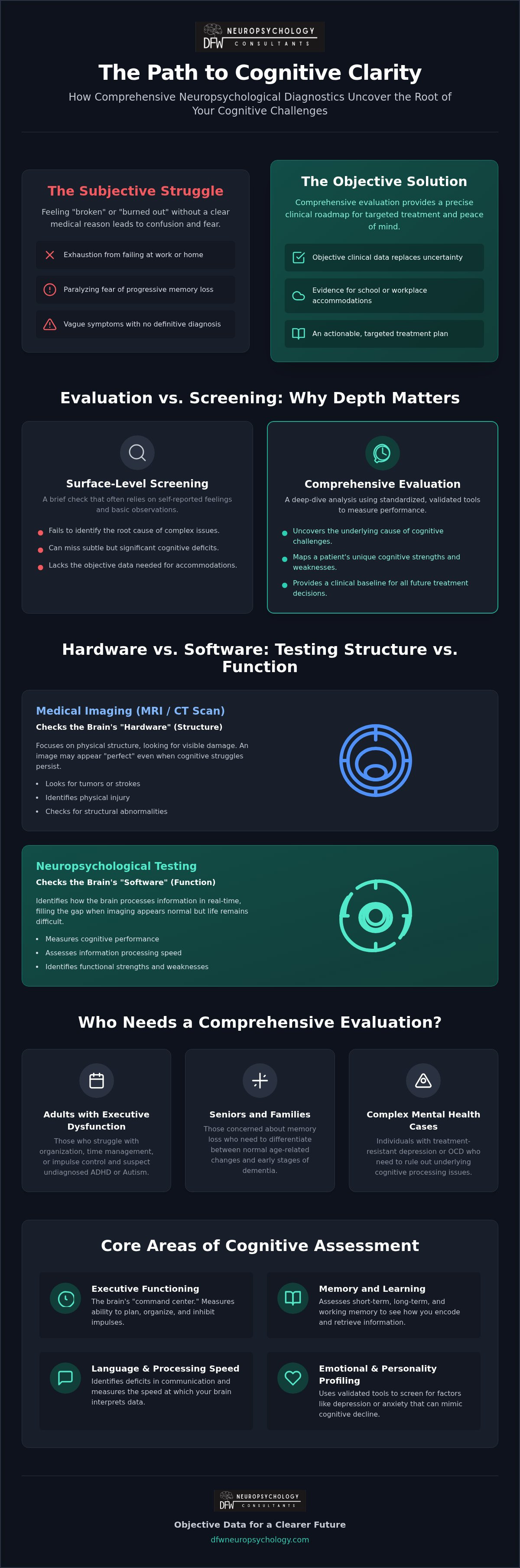
Many patients feel frustrated when a physician tells them their brain MRI or CT scan looks "perfect," yet they still struggle to remember names or focus on complex tasks. This happens because physical imaging focuses on structure; it looks for tumors, strokes, or physical damage. Neuropsychological testing focuses on function. If the brain is a computer, the MRI checks the hardware while the neuropsychologist checks the software. As a brain-behavior architect, the neuropsychologist identifies how the brain processes information in real-time. These services fill the critical gap when physical imaging appears normal but daily life remains difficult.
Who Needs a Comprehensive Diagnostic Evaluation?
Specific populations benefit most from the depth of a comprehensive evaluation. It's often the missing link for those who haven't found relief through traditional means. Common candidates include:
- Adults with Executive Dysfunction: Individuals who struggle with organization, time management, or impulse control and suspect undiagnosed ADHD or Autism.
- Seniors and Families: Those concerned about memory loss who need to differentiate between normal age-related changes and the early stages of dementia.
- Complex Mental Health Cases: Individuals dealing with treatment-resistant depression or OCD who need to rule out cognitive processing issues that may be driving their symptoms.
By identifying the specific cognitive strengths and weaknesses at play, these evaluations provide the clarity needed to move from a state of uncertainty to a state of informed action.
Core Areas of Cognitive and Psychological Assessment
To provide a complete clinical picture, neuropsychological diagnostic services evaluate several distinct yet interconnected cognitive domains. This isn't a one-size-fits-all test. It's a methodical exploration of how your brain manages complex tasks under standardized conditions. By breaking down cognitive function into specific areas, clinicians can identify the exact location of a "bottleneck" in your daily performance. This granular level of detail is what allows a specialist to build a roadmap for your recovery or management plan.
The assessment typically begins with executive functioning, which acts as the brain's command center. Tests in this domain measure your ability to plan, organize, and inhibit impulses. Next, we examine memory and learning. This goes beyond simple recall; it assesses short-term, long-term, and working memory capacity to see how you encode and retrieve new information. As Johns Hopkins University explains evaluations, these assessments are essential for distinguishing between different types of cognitive and psychological challenges that often look identical on the surface.
Language and processing speed are also critical components. We identify subtle deficits in communication or the speed at which your brain interprets incoming data. Finally, the evaluation includes objective emotional and personality profiling. This isn't based on a brief chat; it uses validated tools to screen for depression, anxiety, or OCD. These psychological insights ensure that emotional factors aren't being mistaken for cognitive decline, and vice versa. If you're ready to move toward clarity, exploring neuropsychological diagnostic services can provide the objective evidence you need.
Adult ADHD and Autism Diagnostic Services
Adult diagnosis requires a significantly different clinical battery than childhood testing. Adults have often spent decades "masking" their symptoms or developing elaborate compensation strategies that hide their struggles from friends and coworkers. Our evaluations look past these external behaviors to understand the full neurocognitive profile. We move beyond simple focus issues to see how neurodivergence impacts your emotional regulation and social processing in a professional or family setting.
Dementia and Memory Loss Diagnostics in DFW
For seniors and their families in North Texas, differentiating between "normal aging" and early-stage neurodegenerative disorders is a primary concern. Our diagnostic services provide the clinical rigor needed to make this distinction with confidence. We emphasize the value of baseline testing for seniors across Irving, Dallas, and Fort Worth. Having this data doesn't just provide a diagnosis; it informs family caregiving strategies and allows for better medical management as you plan for the future. Objective data is the best tool for maintaining autonomy and quality of life.
Evaluation vs. Screening: Why Depth Matters for Diagnosis
In a digital age where a five-minute online quiz can suggest a medical condition, it's easy to mistake a brief screening for a definitive diagnosis. However, relying on 10-minute screenings for life-altering health decisions carries significant clinical risks. While a screening tool is designed to flag potential issues, it lacks the resolution to explain why those issues exist or how they interact with your unique brain chemistry. Comprehensive neuropsychological diagnostic services provide the high-definition clarity required to move from suspicion to certainty.
Differential diagnosis is the process of distinguishing a particular disease or condition from others that present similar clinical features. This is where the depth of a professional evaluation becomes invaluable. For example, the executive dysfunction seen in adult ADHD can look remarkably similar to the cognitive symptoms of chronic anxiety or early-stage depression. Without a deep dive into brain function, you might receive a treatment plan that addresses the symptoms while ignoring the root cause. A formal neuropsychological report carries immense legal and clinical weight, serving as a foundational document for medical teams, insurance providers, and disability determinations.
The Clinical Value of Objective Data
Standardized testing provides a level of reliability that self-report questionnaires simply can't match. When you fill out a form about your symptoms, your answers are filtered through your current mood and personal perceptions. Objective data reduces this bias by measuring actual performance on validated tasks. By utilizing normative data, a neuropsychologist compares your results to healthy peers of the same age and education level. This scientific comparison reveals whether your challenges are statistically significant or within an expected range for your demographic.
When a Screening Isn't Enough
There are specific life milestones where a surface-level screening is entirely insufficient. If you're applying for workplace accommodations, navigating legal proceedings, or seeking clearance for major neurosurgery, a comprehensive diagnostic service is often a mandatory requirement. These high-stakes situations demand more than a simple "yes or no" answer; they require a detailed analysis of your functional capacity. A full evaluation provides the "Why" behind the "What," identifying whether cognitive symptoms stem from metabolic issues, psychological distress, or neurological changes. This level of detail ensures that your clinical roadmap is built on a foundation of objective facts rather than assumptions.
The Diagnostic Journey: What to Expect in 2026
Understanding the path toward cognitive clarity starts with a clear view of the clinical process. Neuropsychological diagnostic services follow a structured, four-step progression to ensure no detail of your cognitive health is overlooked. This methodical approach provides the security of knowing your diagnosis is based on exhaustive clinical evidence rather than a brief snapshot of your symptoms. Each phase is designed to build upon the last, moving you closer to a definitive roadmap for your health.
- Step 1: The Clinical Intake: This is the foundation of the evaluation. During this initial meeting, we gather a thorough history of your medical, developmental, and social background to define the specific diagnostic questions that the testing needs to answer.
- Step 2: The Testing Appointment: The testing day is the core of the evaluation. It involves a methodical series of paper-and-pencil and digital tasks designed to stress-test your cognitive systems. While basic screenings take minutes, a professional diagnostic session often spans several hours of active engagement to capture how your brain performs under pressure.
- Step 3: Scoring and Analysis: After the testing is complete, the neuropsychologist synthesizes the raw data into a cohesive profile. We compare your scores against normative data to identify statistically significant patterns.
- Step 4: The Feedback Session: This is where the data becomes an action plan. We review the results together, providing a clear explanation of the findings and a list of targeted recommendations for your care.
If you're ready to move from uncertainty to a clear plan of action, you can request a clinical intake to begin your diagnostic journey.
Preparing for Your Diagnostic Appointment
Success on testing day begins with proper physical preparation. It's essential to get a full night's sleep and eat a protein-rich breakfast to maintain stamina during the several hours of cognitive tasks. You should take all regular medications unless specifically instructed otherwise by our clinical team. Don't forget to bring any relevant documents, such as previous medical records, school reports, or recent work evaluations. Our goal is to provide a supportive environment that minimizes test anxiety, allowing your true cognitive abilities to shine through the data.
Understanding the Final Diagnostic Report
The final product of these neuropsychological diagnostic services is a comprehensive clinical report. This document includes your history, an interpretation of all test scores, and a definitive diagnosis when applicable. It's a powerful tool for securing accommodations in Dallas-area schools or North Texas workplaces. Most diagnostic reports have a clinical lifespan of two to three years; however, individuals managing neurodegenerative conditions may require more frequent updates to track changes over time. This report serves as your permanent medical record of cognitive function, providing the objective evidence needed for long-term care management.
Specialized Diagnostic Services at DFW Neuropsychology
DFW Neuropsychology provides high-level neuropsychological diagnostic services tailored specifically for the adult and senior populations of North Texas. Our practice serves as a critical bridge between the initial observation of a problem and the commencement of a targeted treatment plan. By focusing exclusively on diagnostic clarity, we avoid the potential distractions associated with long-term psychotherapy or medication management. This specialization allows us to dedicate our full expertise to the clinical rigor required for accurate ADHD, Autism, and Memory Loss assessments.
Our reports are designed to be actionable documents that empower local physicians and specialists. When a neurologist or primary care doctor receives a report from DFW Neuropsychology, they aren't just getting a list of scores. They're receiving a comprehensive analysis of the patient's functional capacity. This objective data allows medical providers to refine their care strategies, whether that involves adjusting medications or recommending specific cognitive rehabilitations. We act as a scientific partner for families, providing the definitive evidence needed for making critical life decisions.
Serving the DFW Community
Our local presence across Irving, Dallas, and Fort Worth ensures that accessible cognitive care is available to North Texas families. We also extend our reach to communities in Keller and Arlington, understanding the specific stressors and needs of professionals and seniors in this region. Whether you're navigating a complex disability application or seeking clarity on age-related cognitive decline, our team approaches every evaluation with a commitment to methodical assessment. We believe that residents of the DFW area deserve specialized neuropsychological diagnostic services that meet the highest clinical standards of the field.
Your Next Steps Toward Clarity
Beginning the process is straightforward and intentional. To schedule an intake for a neuropsychological diagnostic evaluation, you'll first meet with our team to discuss your concerns and review your medical history. This intake defines the diagnostic questions we'll answer during your testing session. Following the diagnosis, our role shifts to that of a consultant within your broader care team. We provide the data, but we also offer the guidance needed to implement the recommendations found in your report. You can Schedule your diagnostic consultation with DFW Neuropsychology today to take the first step toward reclaiming your cognitive clarity.
Securing Your Cognitive Future
Achieving cognitive clarity isn't about finding a label; it's about building a foundation for better health. Throughout this guide, we've explored how professional evaluations move beyond surface-level symptoms to reveal the functional architecture of the brain. By prioritizing depth over quick screenings, you gain the objective data necessary to differentiate between normal aging and progressive conditions. These methodical, expert-led assessments provide the clinical evidence required for workplace accommodations and personalized medical care.
Choosing comprehensive neuropsychological diagnostic services ensures that your treatment plan is based on scientific rigor rather than guesswork. Our practice provides specialized expertise for ADHD, Autism, and Dementia, serving families across Dallas, Fort Worth, and Irving with precise, objective data. This clarity empowers you to move from uncertainty to informed action, providing the peace of mind you deserve.
If you're ready to define your path forward with professional precision, you can Request a Neuropsychological Diagnostic Evaluation in DFW today. Taking this step is a vital investment in your long-term well-being and quality of life. We look forward to being your clinical partner on this journey toward improved health.
Frequently Asked Questions
How long does a neuropsychological diagnostic evaluation take?
A comprehensive evaluation typically requires several hours of active engagement, often ranging from four to eight hours depending on the complexity of the diagnostic question. This timeframe includes the clinical intake, the administration of various standardized tasks, and short breaks to manage fatigue. It's a thorough process designed to capture a complete profile of your brain's functional capacity rather than a brief snapshot of symptoms.
Is a neuropsychological evaluation covered by insurance in Texas?
Many insurance plans in Texas provide coverage for these assessments when they're deemed medically necessary by a physician. However, coverage levels and pre-authorization requirements vary significantly between different providers and specific policies. It's essential to contact your insurance carrier directly to verify your benefits for neuropsychological diagnostic services and understand any potential out-of-pocket responsibilities before your appointment.
Can a neuropsychological evaluation help with Social Security Disability applications?
Yes, these evaluations provide the objective, standardized data required by the Social Security Administration to document functional limitations. A detailed clinical report offers the specific evidence needed to show how cognitive impairments impact your ability to maintain employment. This formal documentation is often a critical component of a successful disability claim because it moves beyond subjective complaints to provide measurable data.
What is the difference between a psychiatrist and a neuropsychologist?
A psychiatrist is a medical doctor who focuses primarily on the pharmacological management of mental health conditions. A neuropsychologist is a doctoral-level specialist who focuses on the relationship between brain structures and cognitive functions like memory, language, and attention. While a psychiatrist prescribes medication to treat symptoms, a neuropsychologist uses standardized testing to identify the underlying cognitive causes of behavioral or emotional challenges.
Do I need a referral for neuropsychological diagnostic services in Irving?
The requirement for a referral depends largely on your specific insurance plan. While some PPO plans allow patients to self-refer, many HMO policies require a referral from a primary care physician or neurologist to establish medical necessity for neuropsychological diagnostic services. We recommend checking with your insurance representative to ensure that your evaluation will be recognized for coverage within the North Texas region.
Can this testing diagnose both ADHD and Autism at the same time?
Yes, a comprehensive testing battery is specifically designed to identify co-occurring neurodivergent conditions. Because ADHD and Autism often present with overlapping symptoms, the evaluation uses distinct tools to differentiate between these profiles. This ensures that the final diagnosis accurately reflects your unique neurocognitive architecture, allowing for a more targeted and effective treatment plan that addresses all aspects of your cognitive health.
What should I do if I'm worried about a family member's memory loss?
The first step is to schedule a clinical intake to discuss the specific changes you've observed. Early intervention is vital for differentiating between normal age-related changes and the early stages of a neurodegenerative disorder. Obtaining an objective baseline of their cognitive function allows the medical team to monitor changes over time and helps the family make informed decisions about future care and safety.
Will I get a diagnosis on the same day as my testing?
No, you won't receive a diagnosis on the day of your testing appointment. The neuropsychologist must dedicate several hours to scoring the assessments, analyzing the data, and comparing your performance to normative groups. This methodical analysis ensures the highest level of clinical accuracy. You'll receive your results, a formal diagnosis, and a customized action plan during a separate feedback session scheduled after the analysis is complete.

