
A "normal" MRI does not always mean your brain is functioning at its peak. It is deeply frustrating to struggle with memory lapses, focus issues, or emotional shifts only to have standard imaging return clear results that don't explain your symptoms. You're looking for more than just a picture of brain structure; you need to understand how your brain actually performs during daily tasks. This is where clinical diagnostic testing for brain function becomes essential. It bridges the gap between seeing the organ and understanding the person, validating your lived experiences with objective, scientific data.
By reading this guide, you'll gain professional clarity on how clinical neuropsychological testing identifies the root causes of complex cognitive and behavioral challenges. We'll outline how these evaluations provide a precise diagnostic roadmap, helping you or your loved ones distinguish between similar conditions like depression and early-stage dementia. You will learn how modern assessment tools, such as the WAIS-5 or updated memory scales, generate the data required to move from uncertainty to informed action and better care.
Key Takeaways
- Understand how clinical diagnostic testing for brain function translates complex neurological symptoms into a clear, actionable roadmap for care.
- Identify the specific cognitive domains measured during an evaluation, from intellectual baseline to detailed memory and executive functioning.
- Discover how objective neuropsychological data serves as essential documentation for securing school accommodations or disability benefits.
- Gain a step by step overview of the diagnostic process, including the clinical interview and the structured environment of the testing day.
- Learn why specialized outpatient evaluations are the preferred method for differentiating between similar conditions like ADHD, depression, or early dementia.
What is Clinical Diagnostic Testing for Brain Function?
Clinical diagnostic testing for brain function evaluates how different regions of the brain interact to produce complex thoughts, emotions, and behaviors. While a general physical exam focuses on biological markers like heart rate or reflexes, this specialized testing measures cognitive output. It provides a detailed map of an individual's strengths and weaknesses in areas such as memory, attention, and executive processing. These domains are the building blocks of daily functioning, influencing everything from how you manage a schedule to how you interact with colleagues. This level of detail is necessary because many cognitive disorders don't leave traces in blood work or basic medical screenings.
To achieve a comprehensive understanding, clinicians use a standardized Neuropsychological test battery. These assessments allow for the objective measurement of brain health beyond what a simple conversation or brief screening can reveal. By quantifying cognitive performance, the testing identifies specific patterns that point toward a definitive diagnosis. This process moves the patient from a state of uncertainty to one of informed action, providing the clarity needed to develop a targeted treatment plan.
Structural vs. Functional Brain Diagnostics
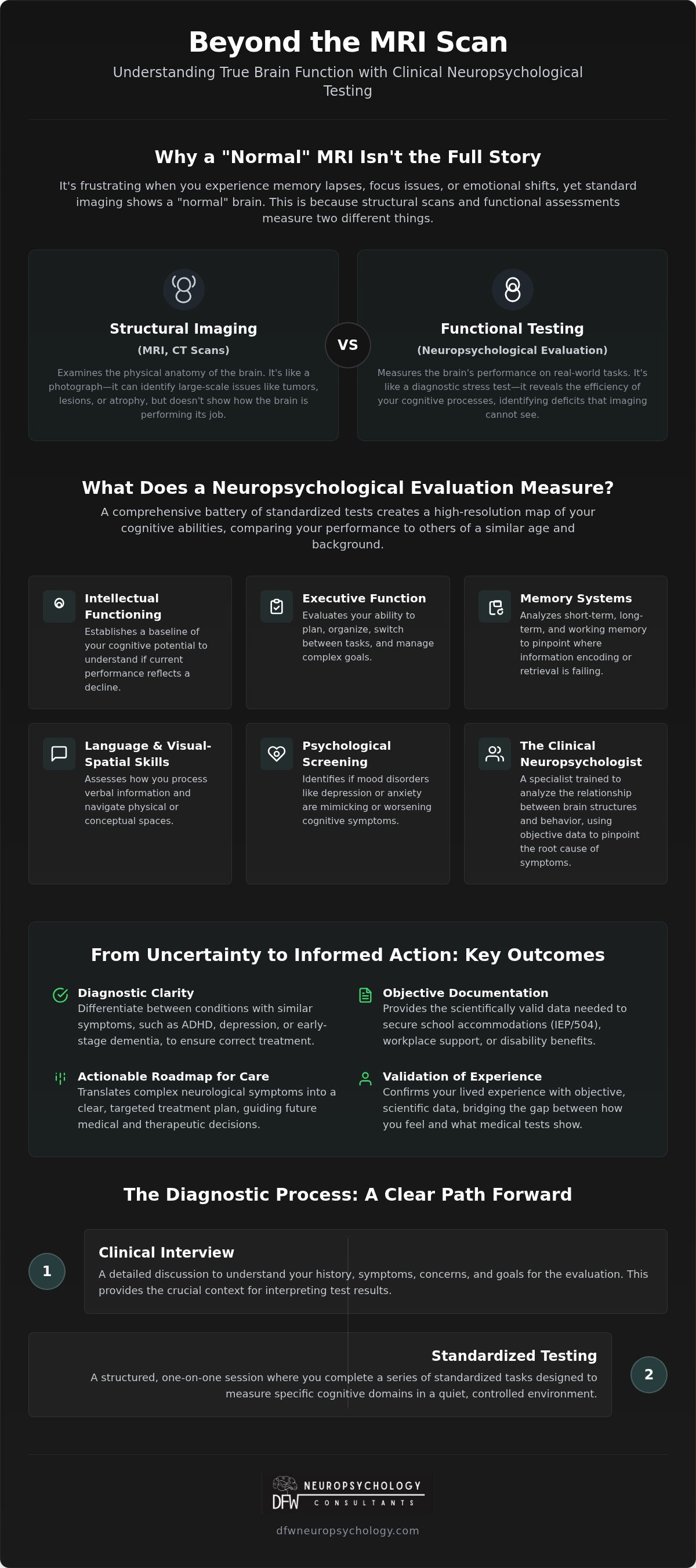
Patients often experience frustration when an MRI or CT scan returns "normal" results despite ongoing cognitive struggles. It's helpful to distinguish between these diagnostic methods. Structural imaging looks at the physical anatomy of the brain to identify tumors, lesions, or atrophy. In contrast, clinical diagnostic testing for brain function is a functional assessment. It evaluates how the brain performs real-world tasks. These evaluations fill the critical gap left by medical imaging by measuring the efficiency of the brain's internal communication networks and identifying deficits that imaging simply cannot see.
The Role of the Clinical Neuropsychologist
A clinical neuropsychologist possesses specialized training that differs from other medical professionals. A neurologist primarily treats physical disorders of the nervous system, while a psychiatrist focuses on managing mental health symptoms, often through medication. Dr. Mathew, a licensed neuropsychologist, focuses on the intricate relationship between brain structures and human behavior. By using objective data, he can pinpoint the root cause of symptoms that might otherwise be misidentified. At DFW Neuropsychology, serving communities across Irving, Dallas, and Keller, the focus remains on providing diagnostic clarity. This expertise is vital for families needing a scientific partner to guide them through complex diagnostic journeys, ensuring that every recommendation is backed by rigorous clinical data.
The Components of a Comprehensive Neuropsychological Battery
A full evaluation involves more than a single questionnaire or a brief conversation. It consists of a meticulously selected suite of standardized assessments designed to measure every major cognitive domain. This clinical diagnostic testing for brain function provides a high-resolution map of how you process information, moving beyond surface-level symptoms to find the underlying neurological cause. By establishing an intellectual baseline, Dr. Mathew can determine if current performance represents a significant decline or if it aligns with your lifelong cognitive profile. This objective data is vital for distinguishing between permanent neurological changes and temporary disruptions caused by external factors.
The battery typically includes several specialized modules:
- Intellectual Functioning: Measures baseline cognitive ability to understand your unique potential.
- Executive Function: Evaluates your ability to plan, organize, and manage complex tasks.
- Memory Systems: Analyzes short-term, long-term, and working memory to see where the "encoding" process might be failing.
- Language and Visual-Spatial Skills: Assesses how you interpret verbal information and navigate physical or conceptual spaces.
- Psychological Screening: Identifies if mood disorders like depression or anxiety are mimicking or exacerbating cognitive symptoms.
Because these tests are standardized, your results are compared against a large normative sample of individuals with similar ages and educational backgrounds. This comparison ensures that the findings are scientifically valid and not based on subjective opinion. Cognitive testing of this caliber is the gold standard for identifying conditions that imaging might miss.
Measuring Attention and Executive Function
Executive dysfunction often manifests as a lack of daily productivity or an inability to control impulses. In both adults and children, testing identifies specific ADHD patterns that distinguish simple "distractibility" from a true neurological deficit. Objective data is critical here because concentration problems can stem from various sources. By measuring response times and error patterns, we can pinpoint exactly where the attention system is breaking down. If you find that your focus is consistently hindering your professional or academic life, a formal Neuropsychological Evaluation can offer the clarity needed for a targeted intervention.
Memory and Language Assessments
One of the most common reasons for seeking clinical diagnostic testing for brain function is to differentiate between normal age-related forgetfulness and early-stage dementia. Testing can identify subtle patterns of memory loss or language processing challenges, such as aphasia, long before they become obvious in casual conversation. Visual-spatial testing also plays a role. It helps identify specific neurological disorders that affect how the brain perceives the world. These insights allow families to plan for the future with confidence rather than fear.
Why Pursue Diagnostic Testing for Brain Function?
The decision to seek an evaluation often stems from a fundamental need to end the cycle of uncertainty. Many patients spend months or years visiting various specialists without receiving a clear explanation for their symptoms. It's exhausting to search for answers without a map. Clinical diagnostic testing for brain function provides the definitive answers required to stop guessing and start treating. By identifying the exact nature of a cognitive or emotional challenge, you can move forward with a personalized treatment roadmap. This plan leverages your specific cognitive strengths while providing practical strategies to bypass areas of deficit.
Beyond personal clarity, these evaluations provide the objective documentation necessary for external support systems. Whether you are seeking Social Security Disability benefits or specific school accommodations, a professional neuropsychological report carries significant weight. It translates subjective experiences into standardized data that insurers, government agencies, and educational institutions recognize. This level of detail is often the missing piece in securing the resources needed for long term success. Dr. Mathew acts as a scientific partner for families across the North Texas region, including Irving, Dallas, and Keller. He provides the objective data necessary for making critical life decisions and navigating complex bureaucracies.
Clarity for Developmental and Learning Disorders
For many adults, receiving an autism or ADHD diagnosis later in life provides a profound sense of relief and validation. It explains lifelong social or organizational challenges that were previously mislabeled as personality flaws or a lack of effort. Clinical testing also identifies specific learning disabilities like dyslexia, which is essential for obtaining workplace or academic support. For students, these reports are the primary requirement for developing Individualized Education Programs (IEPs) or 504 plans. A professional evaluation ensures that the support provided actually matches the student's unique neurological profile, preventing wasted time on ineffective interventions.
Differentiating Mood Disorders from Cognitive Decline
One of the most complex tasks in neuropsychology is distinguishing between organic brain disease and severe mood disorders. Conditions like treatment resistant depression and OCD can mimic the symptoms of early dementia, creating confusion for both patients and their doctors. Clinical diagnostic testing for brain function allows the clinician to rule out organic decline and pinpoint where emotional distress is interfering with cognitive performance. This diagnostic clarity is essential before starting or adjusting psychiatric medications. It ensures that the treatment addresses the actual root cause rather than just masking the symptoms. This methodical approach provides a sense of security and optimism for patients facing complex mental health challenges.
What to Expect During the Diagnostic Testing Process
Understanding the timeline of clinical diagnostic testing for brain function helps alleviate the anxiety often associated with medical evaluations. The process is intentional and methodical, moving from broad history to specific data points. It begins with a comprehensive clinical interview. During this initial meeting, you'll discuss your medical history, current symptoms, and specific cognitive concerns. This dialogue allows the neuropsychologist to tailor the subsequent testing battery to your unique needs, ensuring the evaluation addresses your primary questions.
The actual evaluation takes place on a separate day in a structured, quiet environment designed to minimize distractions. You'll engage in various tasks that measure different aspects of brain health, such as memory, problem solving, and attention. It's a day of objective performance measurement where the focus is on how your brain handles specific challenges. After the testing is complete, the clinician performs a detailed data analysis. Your raw scores are converted into standard scores and compared to age-matched norms. This scientific comparison determines whether your performance falls within the expected range or indicates a clinically significant deficit.
The final and perhaps most important stage is the feedback session. This is a dedicated appointment where you receive the final report and clinical recommendations. Dr. Mathew explains the diagnostic impressions in plain language, helping you understand the root cause of your symptoms. This session transforms raw data into a clear roadmap for future care, providing the validation and clarity needed to move forward. If you're ready to gain this insight, you can schedule a Neuropsychological Evaluation to begin the process.
Preparing for Your Evaluation Day
To ensure the most accurate results, prioritize rest and nutrition before your appointment. Consistency is key. Continue taking prescribed medications unless specifically instructed otherwise by our office. Please bring any relevant medical records, previous testing results, and your own personal observations of your symptoms. Honesty and consistent effort during the tasks are critical. The goal is to capture a true reflection of your cognitive capabilities so that the resulting data is as useful as possible for your long term care.
Understanding the Neuropsychological Report
The resulting neuropsychological report is a comprehensive document that serves as a permanent medical record of your cognitive functioning. It translates standard scores into actionable life changes, such as specific workplace adjustments or academic accommodations. You'll learn how to read the diagnostic impressions and what they mean for your daily life. DFW Neuropsychology also coordinates with your referring physician or school district. This ensures that everyone on your care team understands the findings and can implement the recommended interventions effectively.
Accessing Brain Function Testing in the Dallas-Fort Worth Area
Finding a local specialist who understands the regional healthcare landscape is a vital step in your diagnostic journey. Clinical diagnostic testing for brain function is a specialized service that requires not only scientific expertise but also an understanding of local institutional requirements. In the North Texas region, school districts and employers often have specific standards for documentation when considering accommodations or disability leave. By choosing a provider integrated into the DFW community, you ensure that your results are presented in a format that local authorities recognize and respect.
DFW Neuropsychology serves families across the metroplex, providing a bridge between complex neurological symptoms and the practical needs of daily life. Whether you reside in Irving, Dallas, or Keller, accessing high-level care shouldn't require extensive travel. We provide the objective data necessary to navigate local systems, from securing an IEP in a suburban school district to providing documentation for a corporate HR department in downtown Dallas. This local expertise ensures that your evaluation translates into real-world support and improved quality of life.
Diagnostic Services for North Texas Families
We tailor our evaluations to meet the diverse needs of families in Arlington, Mansfield, and Grapevine. For working professionals, the goal is often to identify executive functioning deficits that hinder career progression. For seniors and their families, the focus shifts to differentiating between normal aging and clinical cognitive decline. Our outpatient clinic provides a calm, focused environment for these detailed assessments, avoiding the hurried atmosphere of large hospital systems. This personalized approach allows for a more thorough investigation of your specific cognitive profile.
Your Path to Cognitive Clarity Starts Here
Navigating the referral process is straightforward at DFW Neuropsychology. While many patients are referred by their primary care physician or neurologist, we also work directly with families who are seeking answers on their own. Choosing a private practice setting for clinical diagnostic testing for brain function offers several advantages, including more personalized attention and a methodical approach to data interpretation. Dr. Mathew and his team are dedicated to helping you move from a state of uncertainty toward informed, confident action. To take the first step toward understanding your brain health, Schedule your clinical diagnostic evaluation today. We are here to serve as your scientific partner in the journey toward better health and clarity.
Moving Toward Diagnostic Certainty
Empowering yourself with objective data is the most effective way to resolve the frustration of unexplained cognitive symptoms. By moving beyond structural imaging, you gain a functional understanding of your brain's performance in real-world scenarios. Clinical diagnostic testing for brain function provides the evidence based clarity required to differentiate between complex conditions like ADHD, autism, and dementia. These comprehensive reports serve as a vital resource for securing school or workplace accommodations, ensuring your environment supports your unique neurological profile.
Under the oversight of a licensed clinical neuropsychologist, our evaluations offer the scientific rigor and empathetic support needed to navigate these medical challenges. You don't have to live with the weight of uncertainty or the confusion of a "normal" scan that doesn't match your experience. We invite you to Request a Consultation for Diagnostic Testing at DFW Neuropsychology today. Gaining a precise understanding of your cognitive health is the first step toward a more informed and optimistic future. We look forward to serving as your trusted partner in this journey.
Frequently Asked Questions
How long does a clinical brain function test usually take?
A comprehensive clinical brain function test typically ranges from three to eight hours depending on the complexity of the diagnostic questions. While a brief cognitive screening may take less time, a full neuropsychological battery is necessary for a definitive diagnosis. This duration allows for a thorough assessment across multiple cognitive domains, ensuring the data is reliable and exhaustive.
Will my insurance cover a neuropsychological diagnostic evaluation?
Insurance coverage for a neuropsychological diagnostic evaluation depends primarily on the concept of medical necessity. Most plans cover clinical diagnostic testing for brain function when it's ordered to diagnose or guide treatment for a suspected medical or neurological condition. It's important to verify your benefits, as testing for purely educational or vocational purposes is often not a covered benefit.
Do I need a doctor's referral for clinical diagnostic testing?
You don't always need a doctor's referral to schedule an evaluation, but many insurance providers require one to authorize payment. If you're paying out of pocket, a self-referral is usually sufficient to begin the process. However, a referral from a neurologist or primary care physician can help streamline the process by providing relevant medical history to our clinical team.
What is the difference between a brain scan and a neuropsychological test?
The primary difference is that a brain scan measures structure, while a neuropsychological test measures function. An MRI or CT scan identifies physical abnormalities like tumors or lesions. Neuropsychological testing evaluates how your brain actually processes information, which is why symptoms can persist even when imaging results appear entirely normal or show no structural changes.
Can testing help me get accommodations for the GRE, LSAT, or MCAT?
Yes, objective neuropsychological testing is the standard requirement for obtaining accommodations on high-stakes exams like the GRE, LSAT, or MCAT. These testing boards require detailed documentation of a disability that significantly impacts your performance compared to your peers. A comprehensive report provides the scientific evidence needed to justify accommodations such as extended time or a private testing room.
What happens if my testing shows I don't have a specific disorder?
If testing rules out a specific disorder, the results still provide immense clinical value by identifying what isn't causing your symptoms. This "negative" finding allows us to pivot and explore other factors, such as sleep hygiene, nutritional deficiencies, or mood disorders. Validating your cognitive strengths is just as important as identifying weaknesses for your overall care plan and future health strategies.
Is brain function testing painful or invasive?
No, clinical diagnostic testing for brain function is entirely non-invasive and painless. It doesn't involve needles, radiation, or physical discomfort. The evaluation consists of verbal questions, paper-and-pencil tasks, and computer-based activities. Most patients find the process engaging, though it can be mentally tiring due to the sustained focus and effort required for accurate results.
How soon will I receive the results of my evaluation?
You'll typically receive the results of your evaluation within two to four weeks of your testing date. This timeframe allows Dr. Mathew to score the assessments, compare your data to age-matched norms, and draft a comprehensive clinical report. We then schedule a feedback session to discuss the findings in detail and provide you with a clear diagnostic roadmap for your care.
